USA 2026 – Show Caves in a New Light
Business Trip Report | April and October 2026 | English Version Rev. 1.01
Cave Lighting CL GmbH & Co. KG: Alexander and Lubov Chrapko
Engineering Light for the World’s Underground Heritage
Introduction – Two Trips, Eleven Show Caves, Many Insights
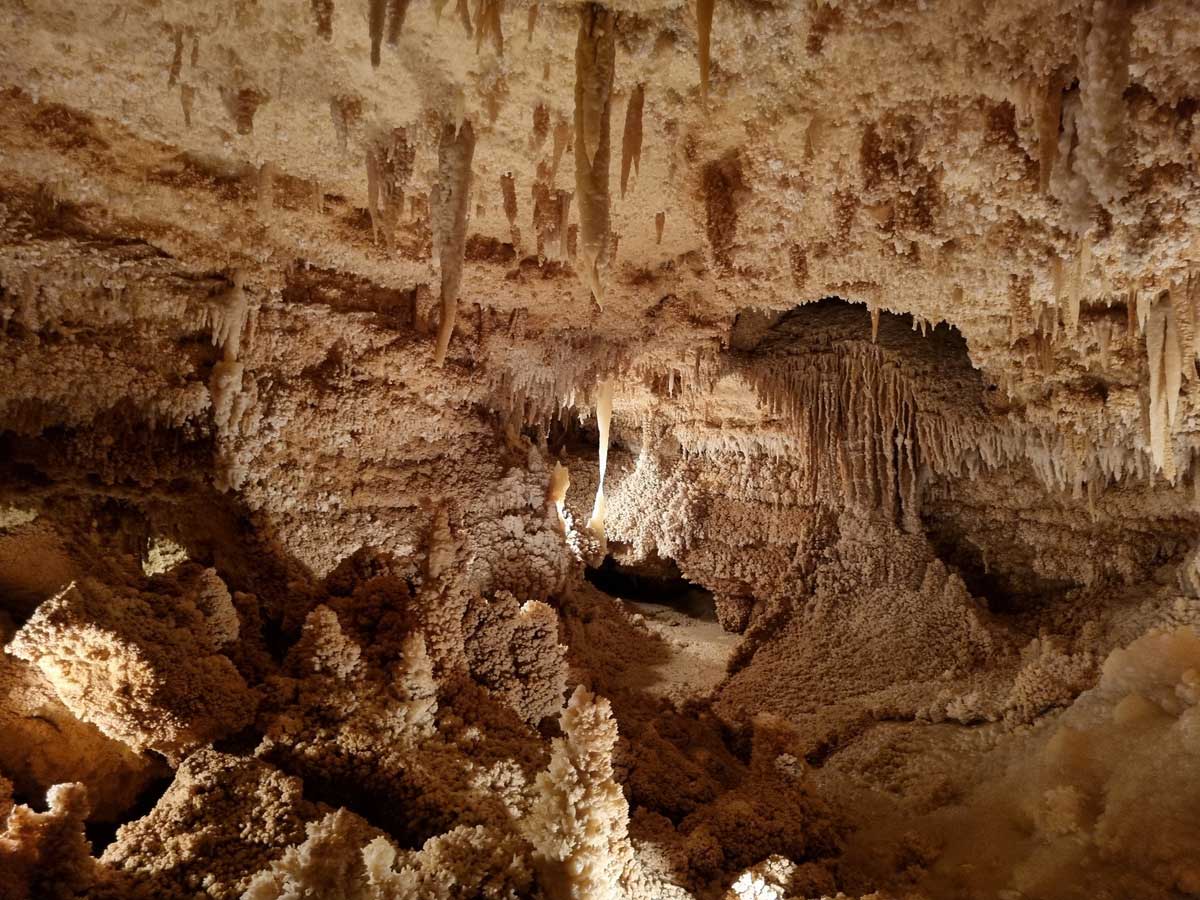
In 2026, two business trips took us to the United States. In April, we visited nine show caves in Colorado, Virginia, and Pennsylvania. In October, our work focused on two additional, very different show caves in Texas, the Caverns of Sonora and Longhorn Cavern. Our main goal was to understand how the caves operate, how their guided tours work, and what the owners and operators hope to achieve. We also evaluated the existing lighting systems. At several sites, we worked directly on lighting concepts, collected technical data, or demonstrated the impact of modern lighting technology. Our two visits in Texas made it especially clear that each cave needs its own lighting solution. At Sonora, the priority is to upgrade electrical infrastructure that has deteriorated with age. At Longhorn, the focus is on overhauling the lighting design, significantly simplifying the electrical system, and preserving historic fixtures.
-
-
Before
Part 1 – Caverns of Sonora
An Extraordinary Natural Wonder in Need of Electrical Upgrades
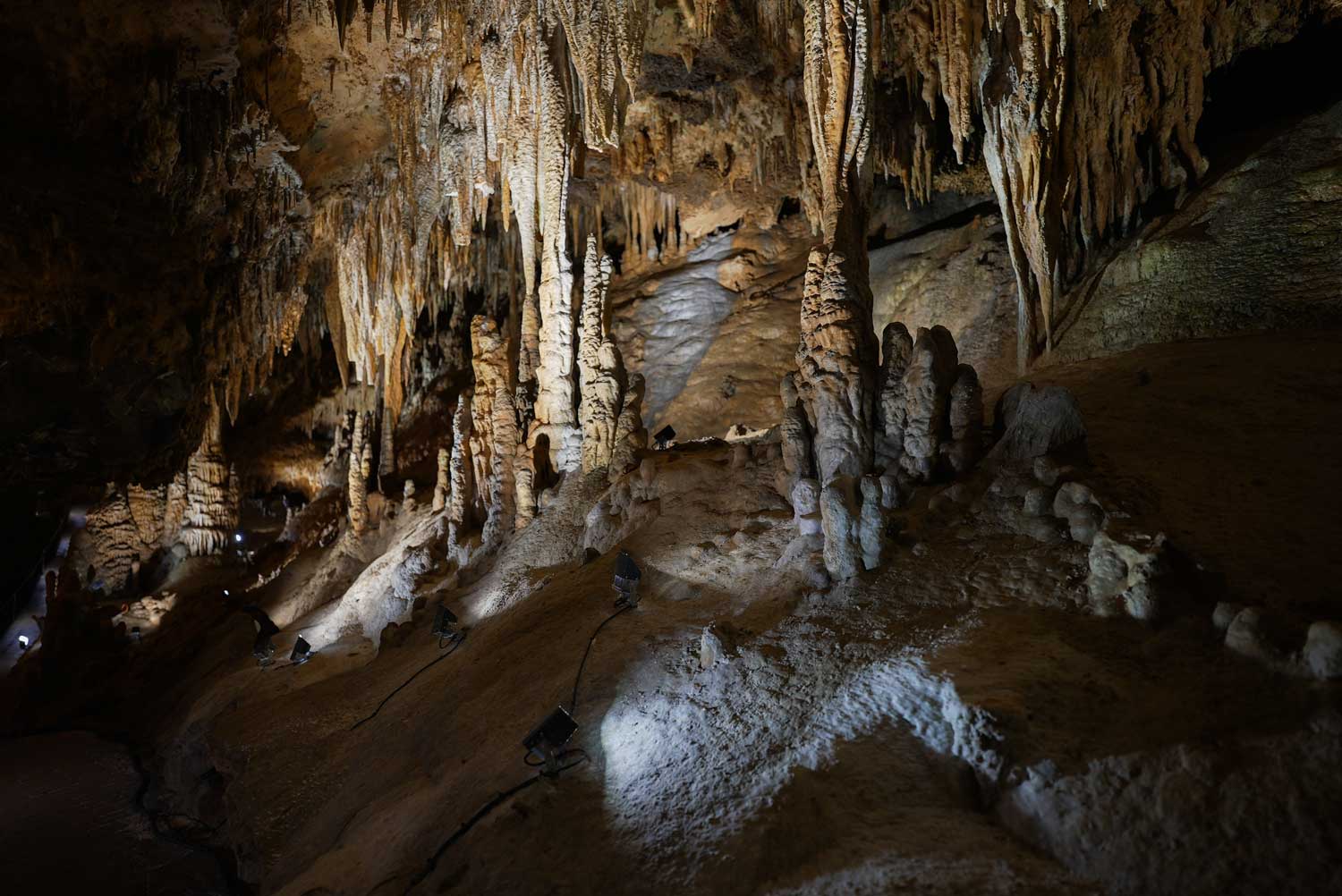
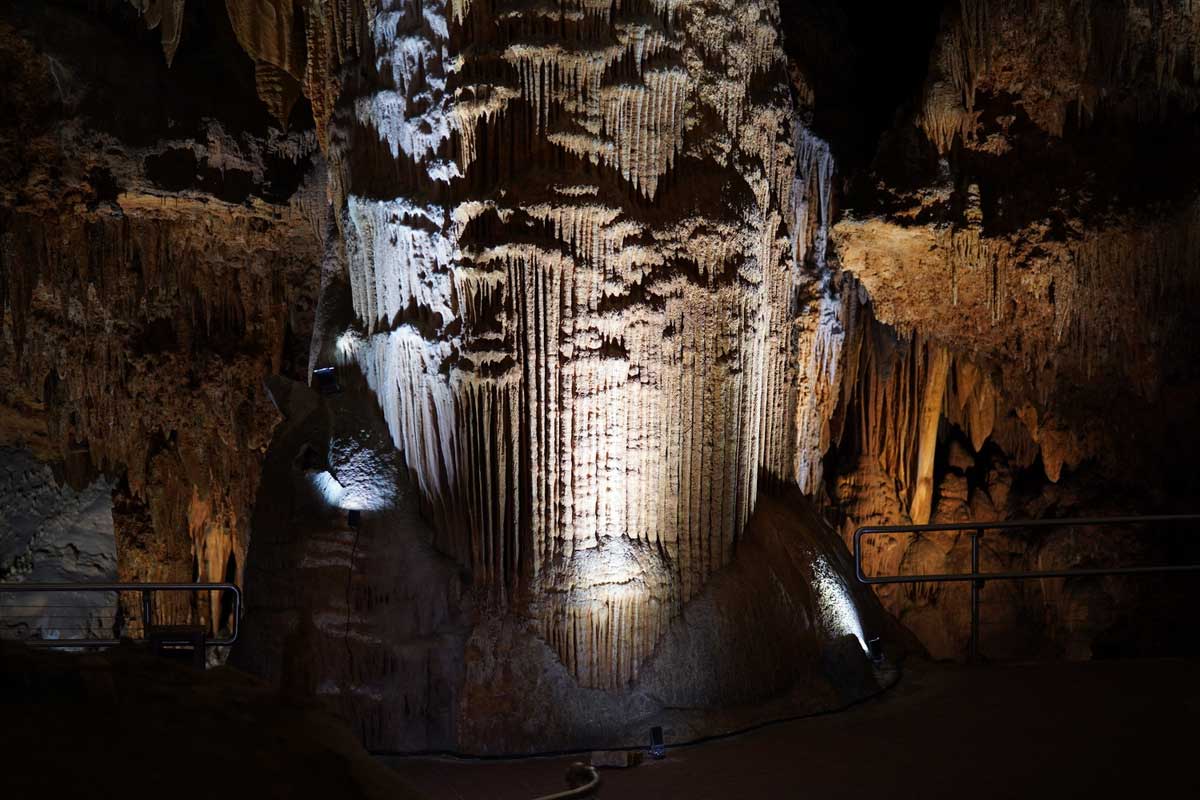
The Caverns of Sonora in Texas are known for their exceptionally delicate stalactite formations and sensitive geological structures. Here, in particular, the quality of the light determines whether visitors can truly appreciate the cave’s natural beauty. At the same time, the high humidity and dripping water place significant demands on all electrical components.
A Long-Standing Relationship
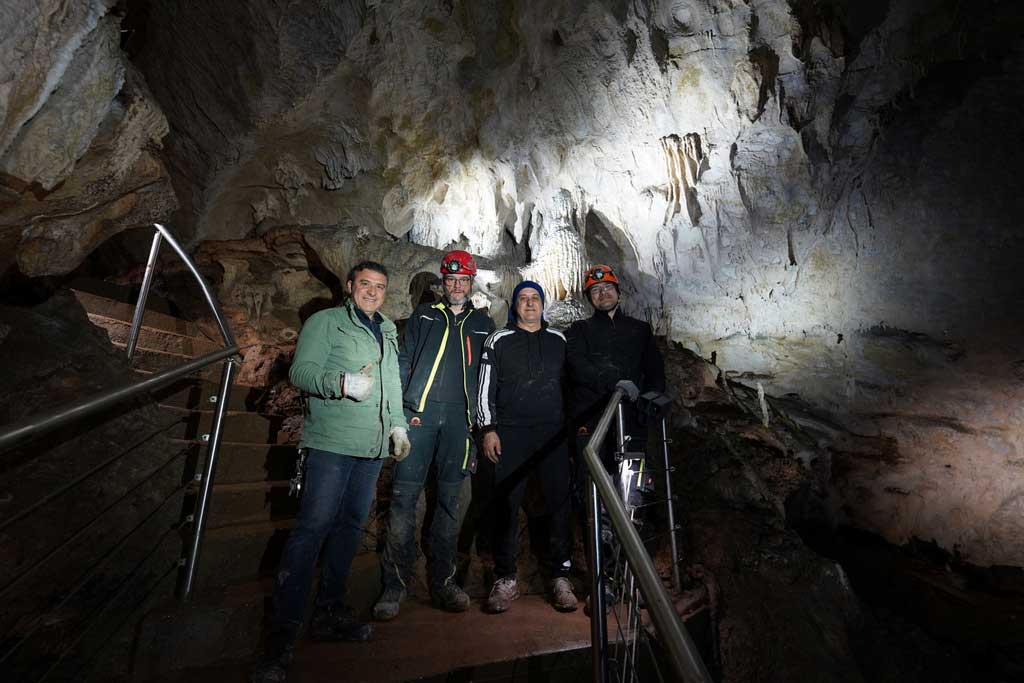
We first visited the Caverns of Sonora about six years ago and ran some initial lighting tests. The results were promising, but no investment decision was made at the time. A few months before our 2026 visit, the owner contacted us again because the existing electrical infrastructure, which dates back to 1958–1960, was causing more and more problems. The last major modernization had taken place several decades earlier. On our return visit, we aimed to assess the condition of the system, demonstrate the effect of new lighting in the cave, survey the areas open to visitors, and lay the groundwork for further project planning.
October 26 – The Cave in a Different Light
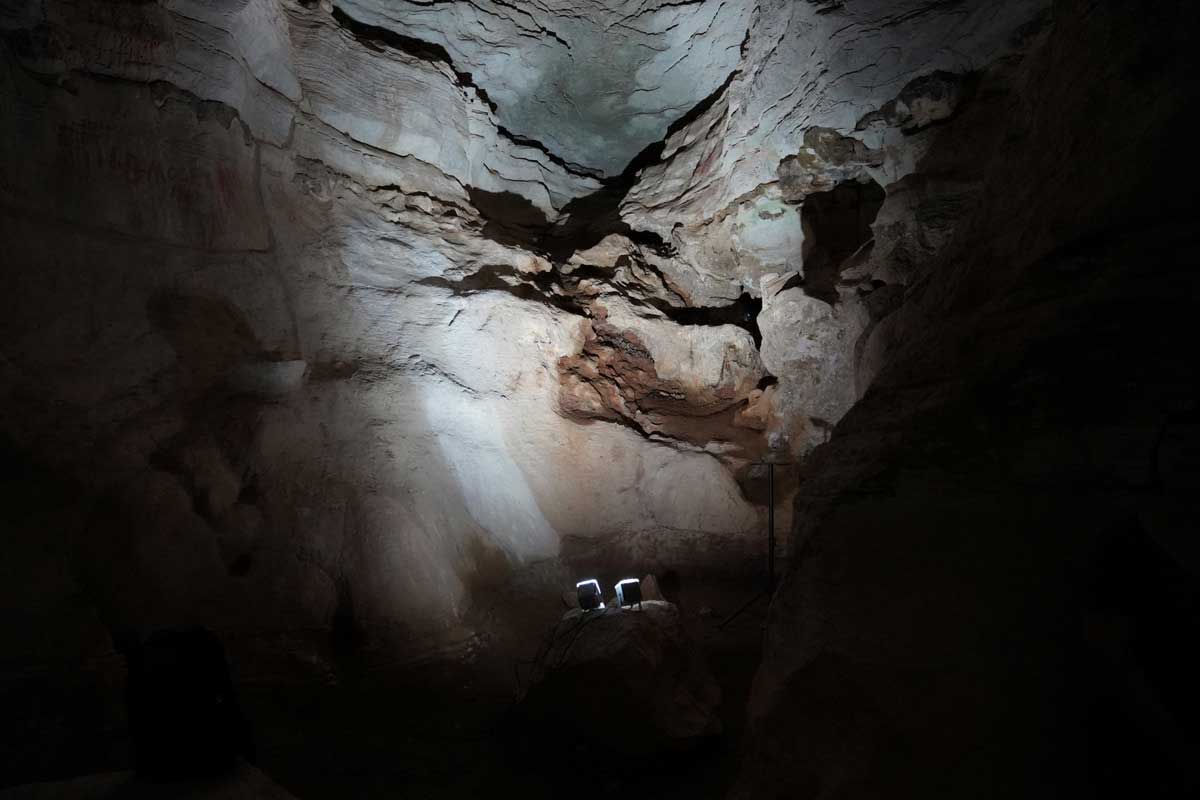
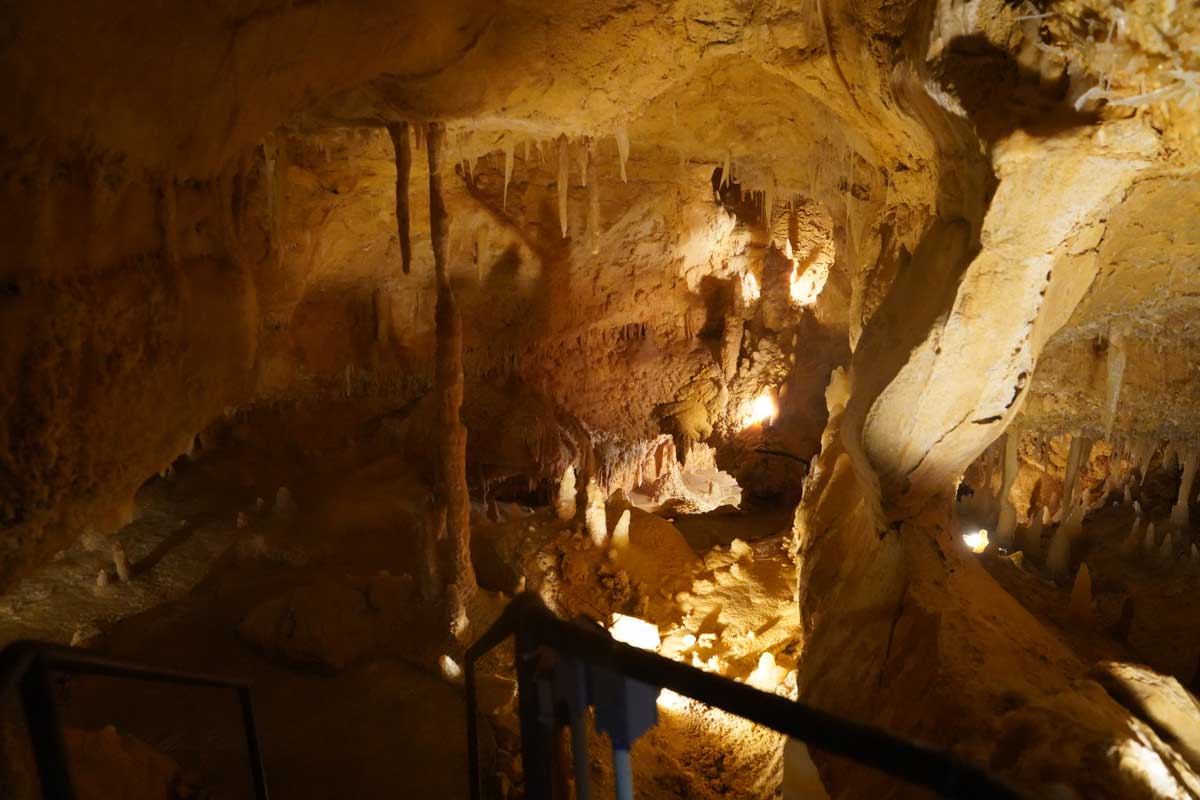
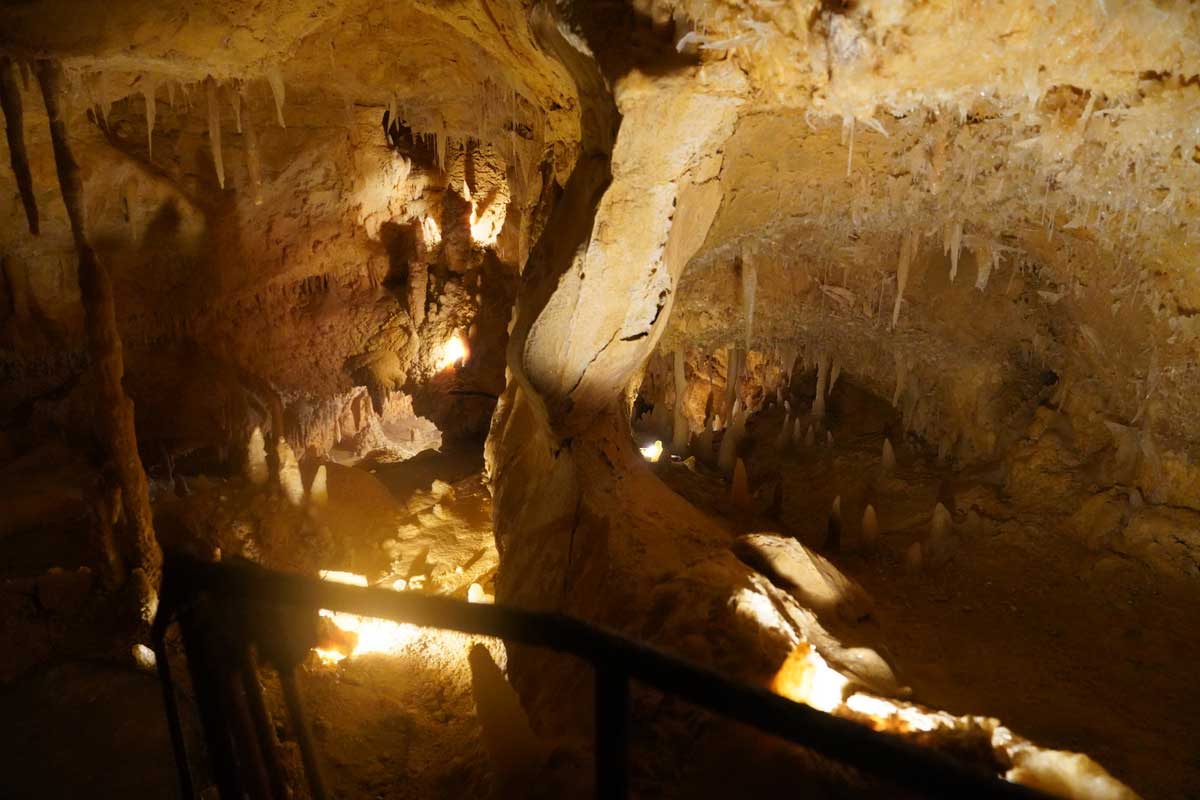
On the first day, we walked through the cave with the site managers, examining both the lighting and the geological features. We then set up a temporary test system using Cave Lighting fixtures in the Red Top area. This let us compare the existing lighting directly with the new design. The difference was remarkable. The finest details and individual stalactite formations stood out clearly, and the depth of the cave was easier to appreciate. The reaction of the owner and management team was particularly striking. Even for people who had known the cave for years, the new lighting offered a fresh view of familiar formations.
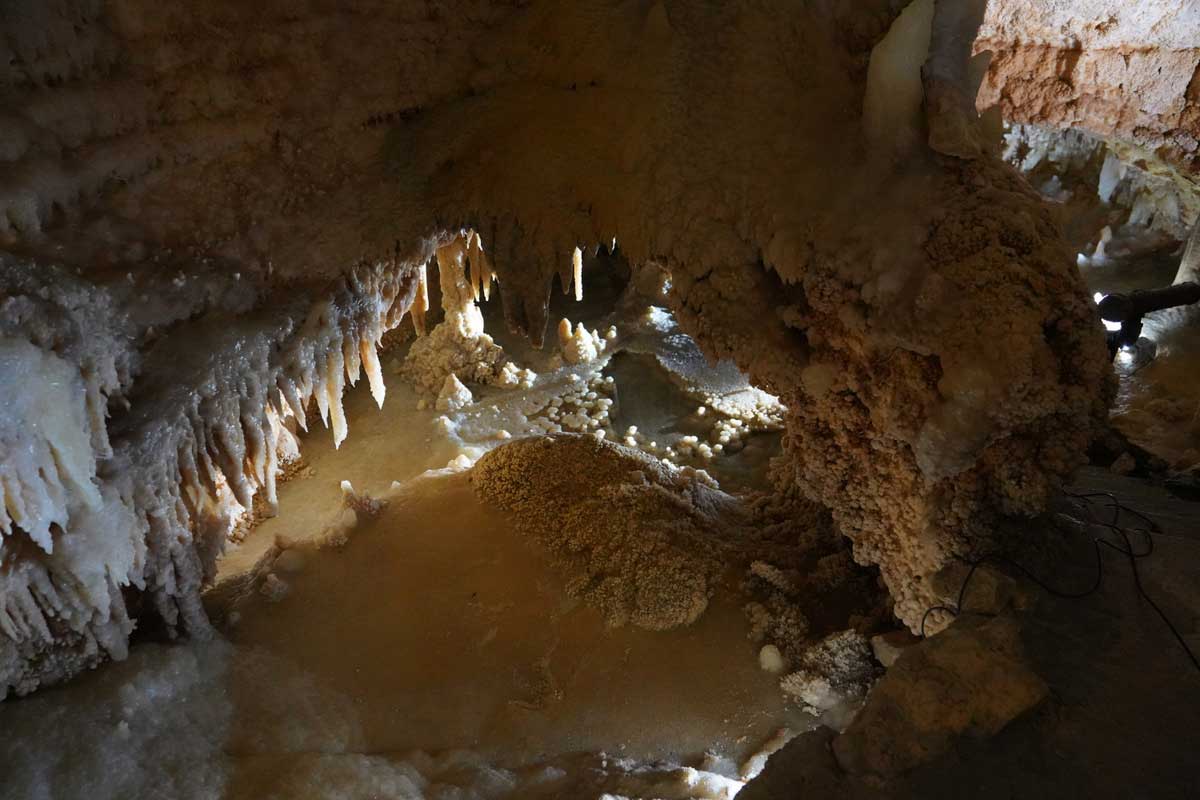
Sonora Caverns before and after Cave Lighting test:
-
Before -
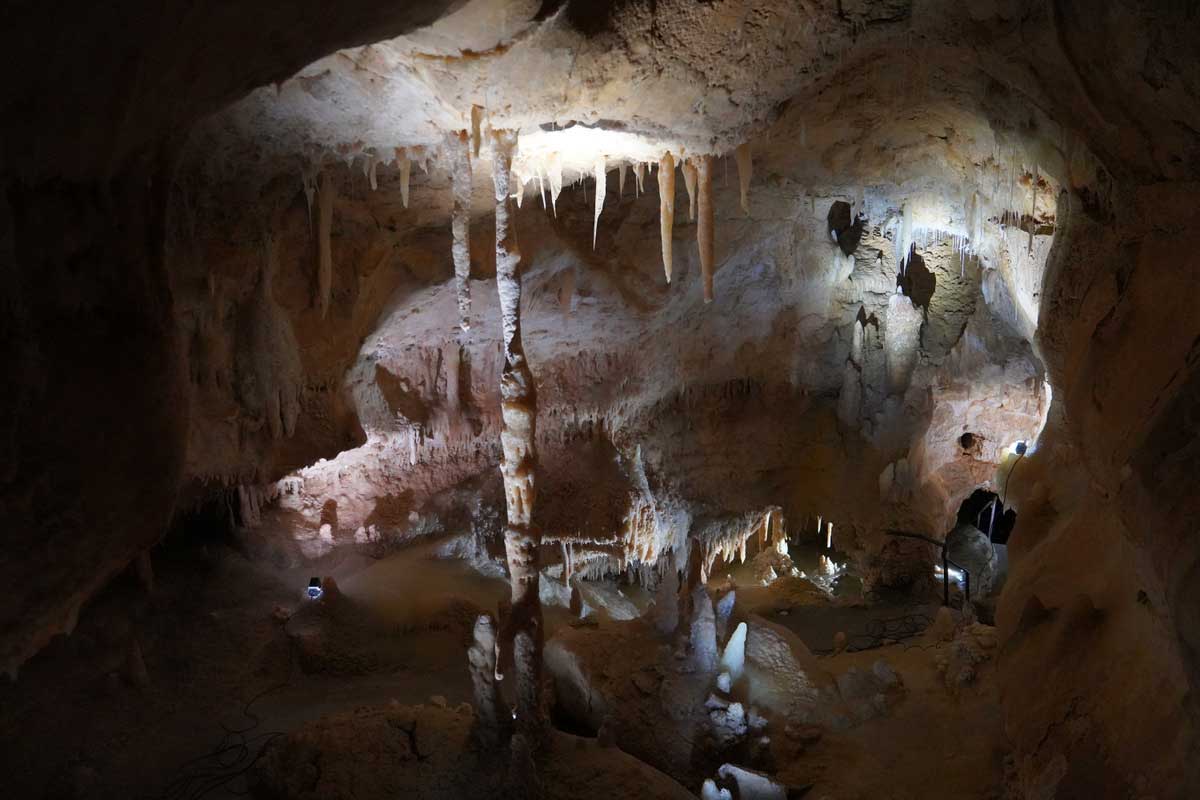
After
-
Before -
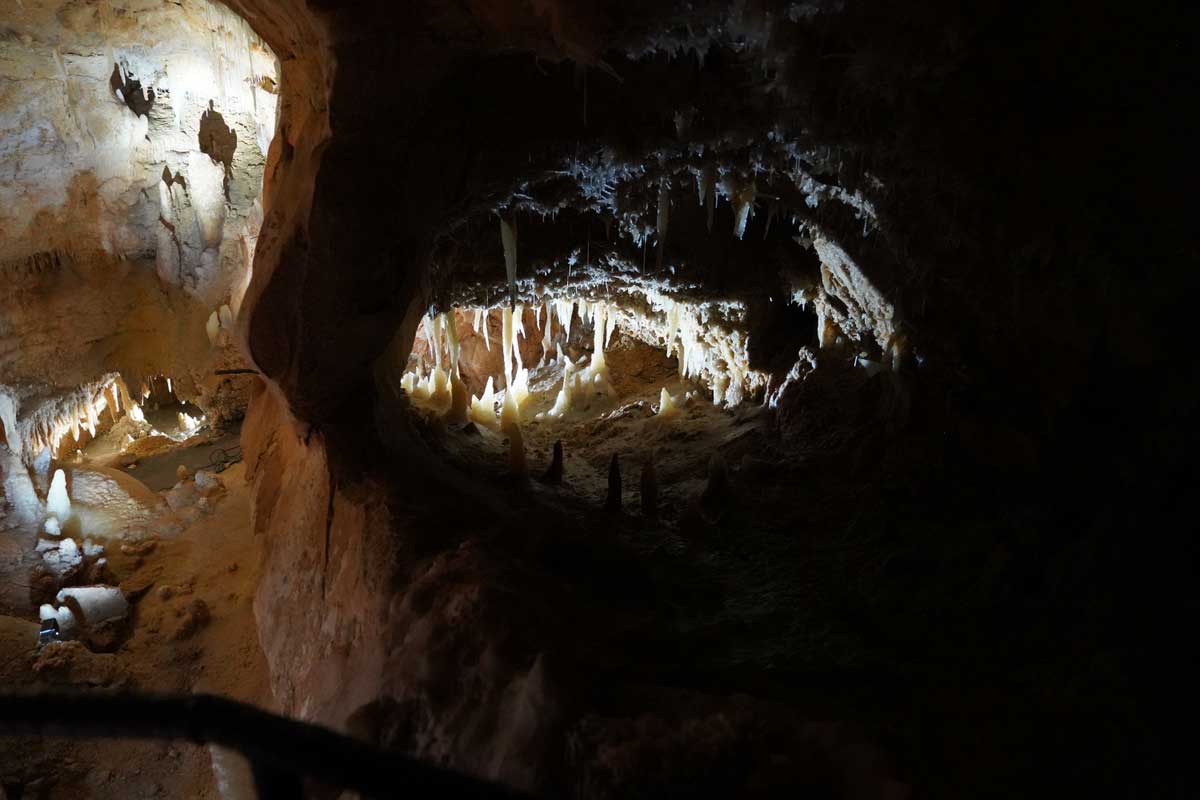
After
The right light can reveal a cave’s natural architecture more effectively than simply increasing brightness.
October 27 – Surveying and Technical Assessment
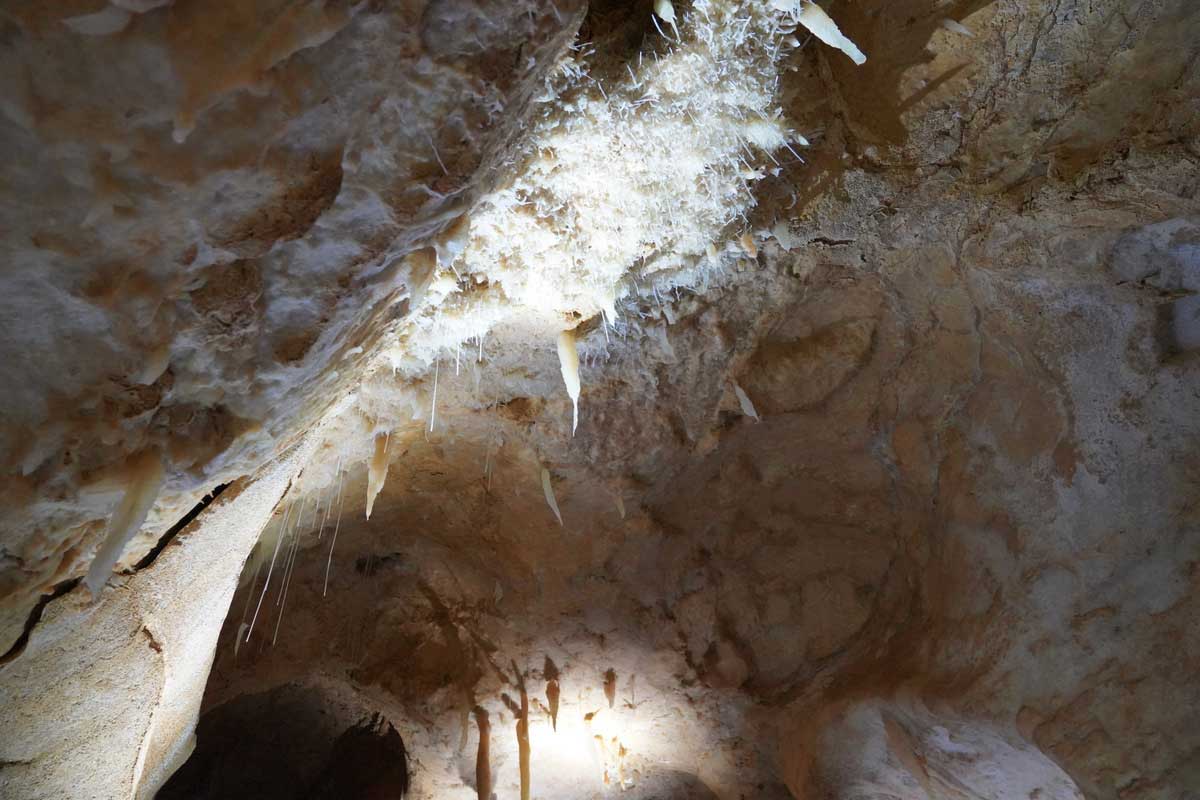
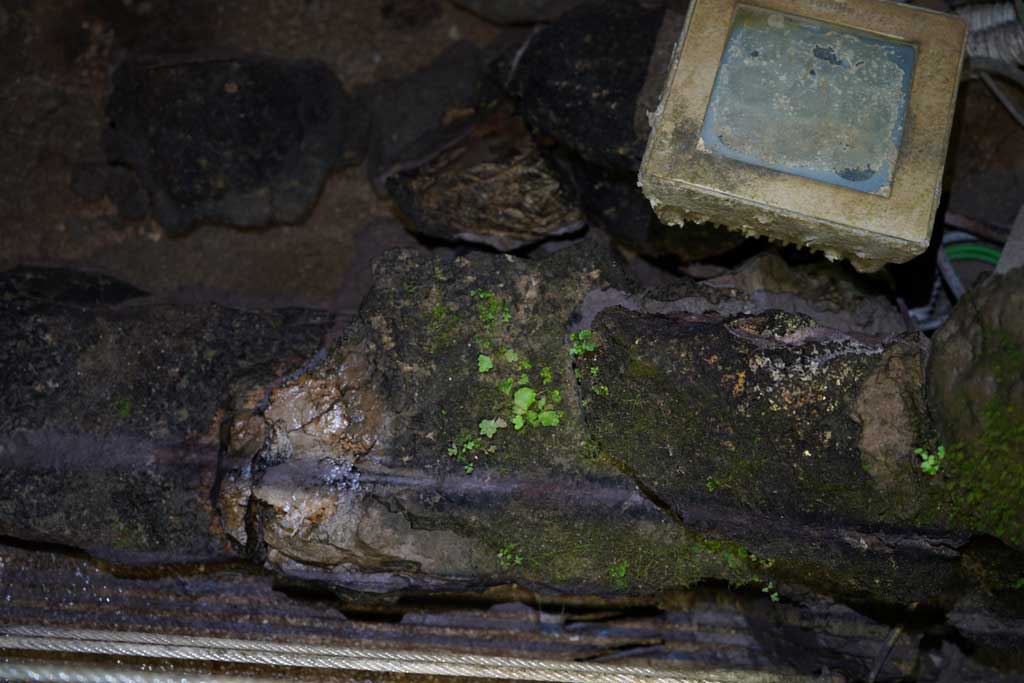
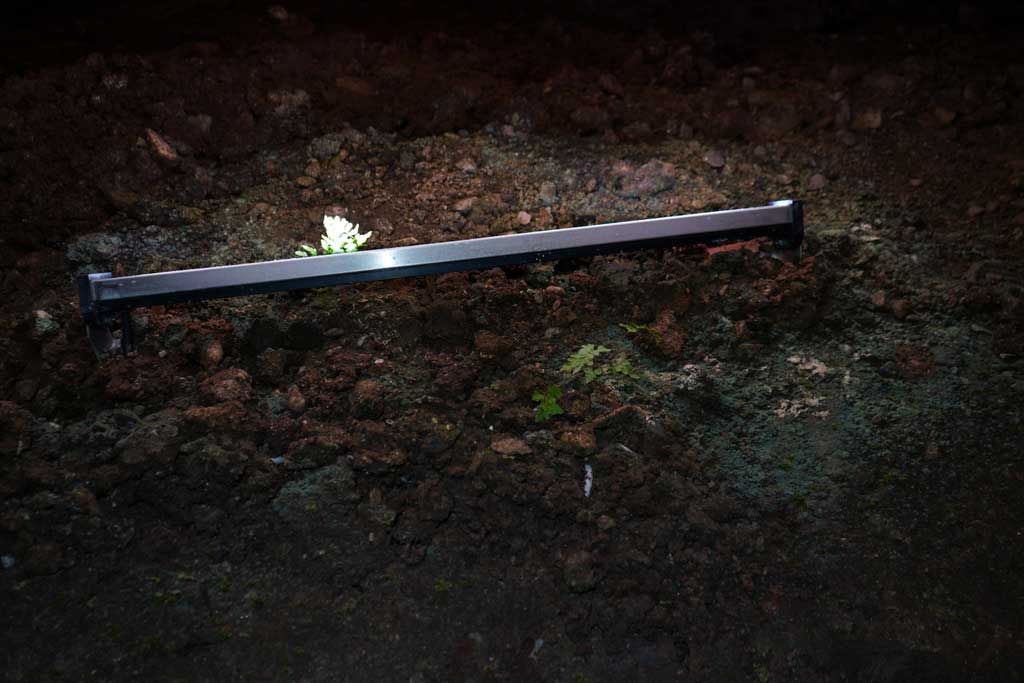
On the second day, we focused on collecting technical data. We divided the areas open to visitors into 23 zones for further planning, filmed each section, and estimated future lighting requirements. With the Moasure system, we measured the guided tour route at approximately 1,300 meters, well below the previously cited figure of two miles for the visitor trail. The length of the guided tour route and the extent of the entire cave system are separate measurements. Our survey found approximately 600 permanently installed lights of various designs. During guided tours, staff have been switching the lights on and off mostly by hand, section by section.
A Renovation Beyond Simple Maintenance
The assessment showed that the existing installation required more than isolated repairs. It required substantial technical intervention, improved control, better positioning of luminaires, more discreet installation methods, and a maintenance approach adapted to the environmental conditions of the Pertosa-Auletta Caves.
3. Phase One: Restoring Sala delle Spugne – November–December 2025
A Strategic Starting Point for the Visitor Route
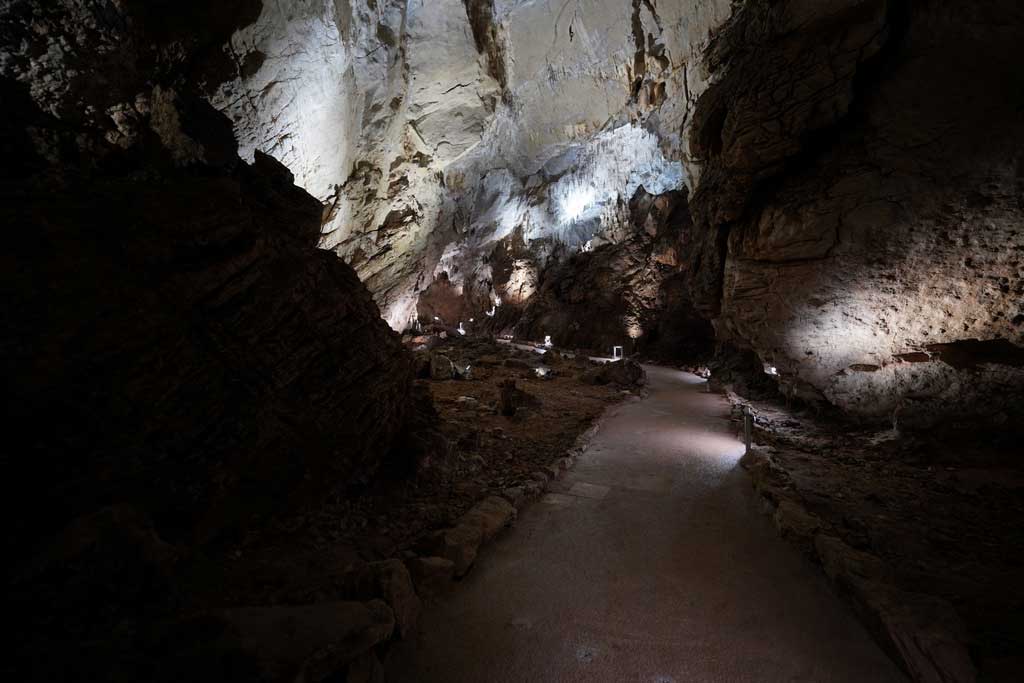
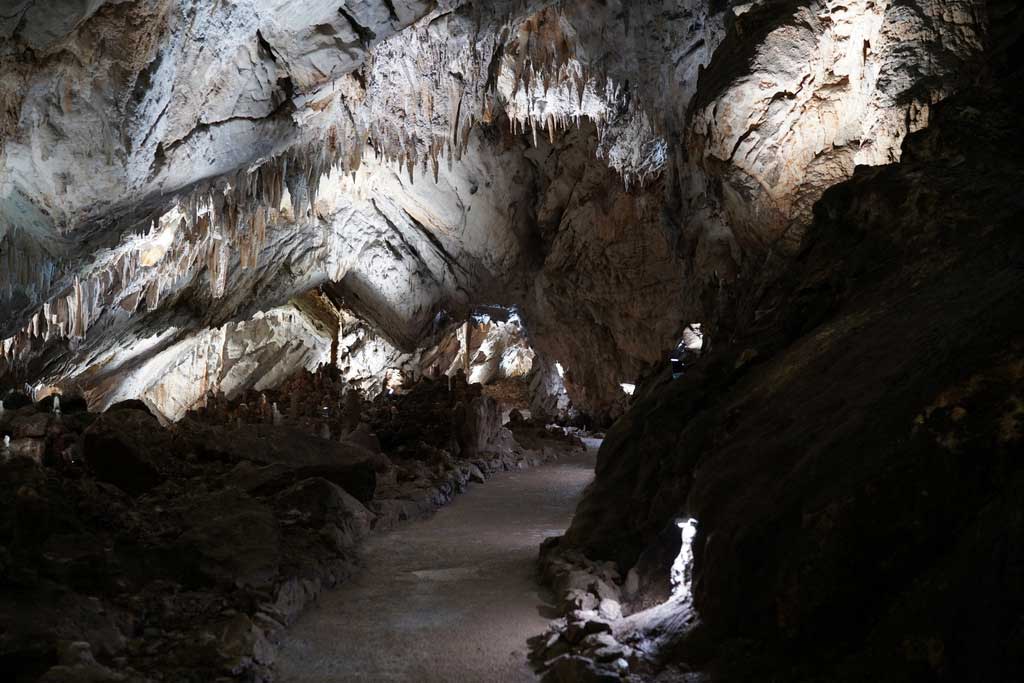
The first phase of the extended maintenance works was carried out between November and December 2025. It focused on the route beginning after the Grande Sala and continuing through the gallery leading to Sala delle Spugne.
This area was selected as the initial intervention zone because it offered a clearly defined section of the visitor route where both functionality and presentation could be significantly improved.
Scope of the Works
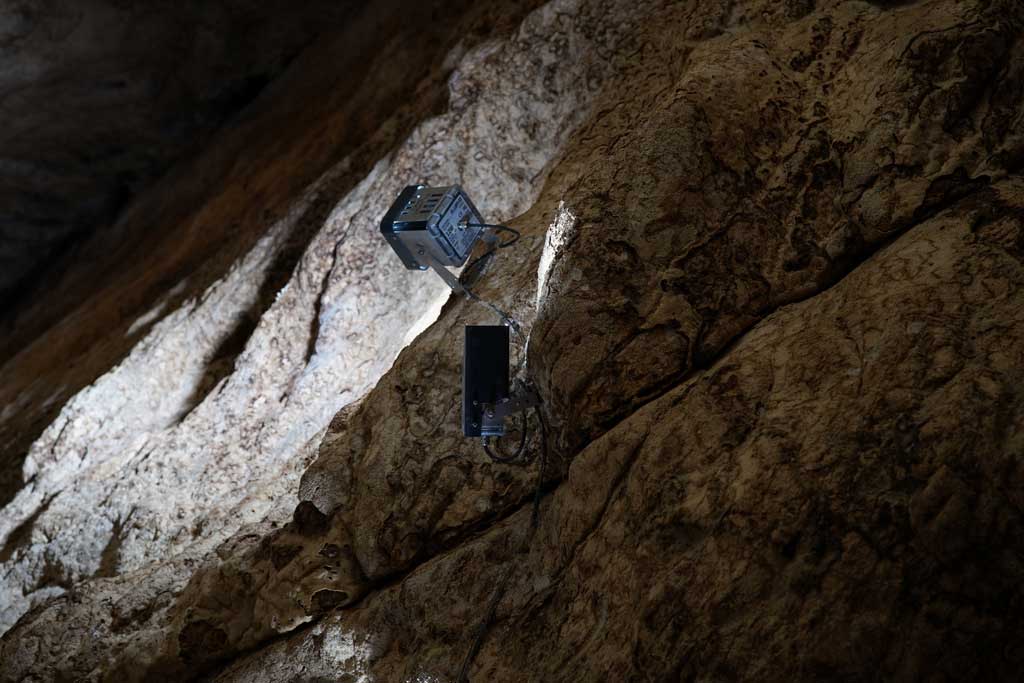
The works included the removal of selected old luminaires, the installation of new lighting fixtures, the creation of new cable routes, the repositioning of luminaires, integration into the control system, the creation of lighting scenes, and final testing and adjustment on site.
These adjustments were essential, as cave lighting must be refined directly in relation to the real shapes, colours, textures, and distances found underground.
Precision Lighting for a More Natural Atmosphere
The new lighting solution combines cold white luminaires, neutral white luminaires, outdoor-rated pathway luminaires, and a small number of RGBW fixtures.
The beam angles were selected according to the specific task of each luminaire, generally using controlled optics such as 10°, 20°, or 40°. This allowed the light to be directed more precisely, reducing unnecessary brightness and helping to create a clearer visual structure within the cave.
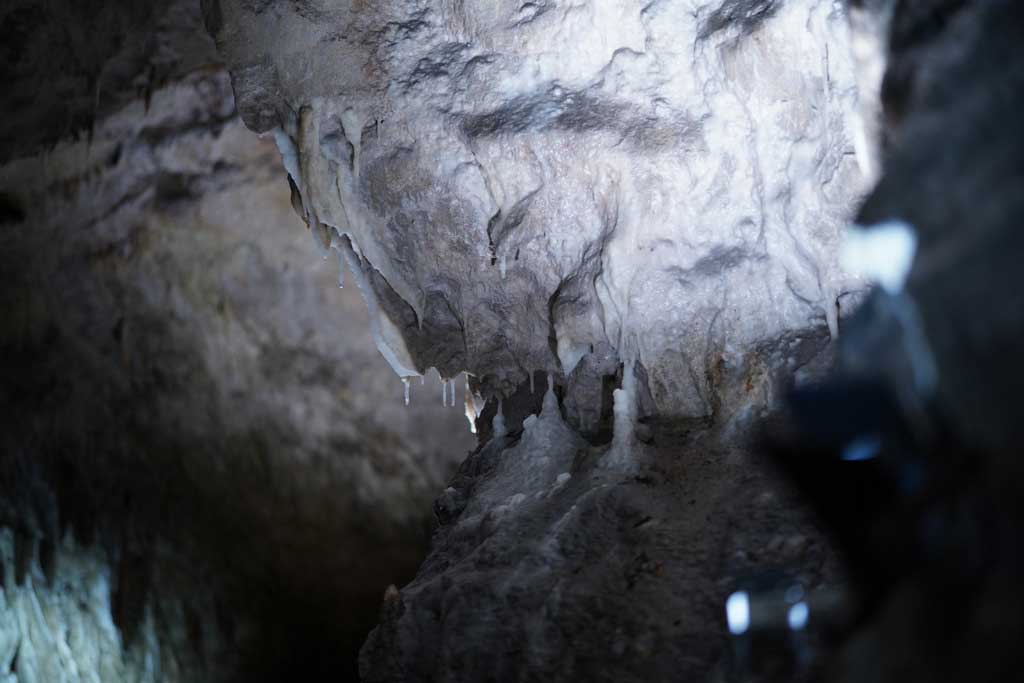
Light and Shadow as a Scenic Tool
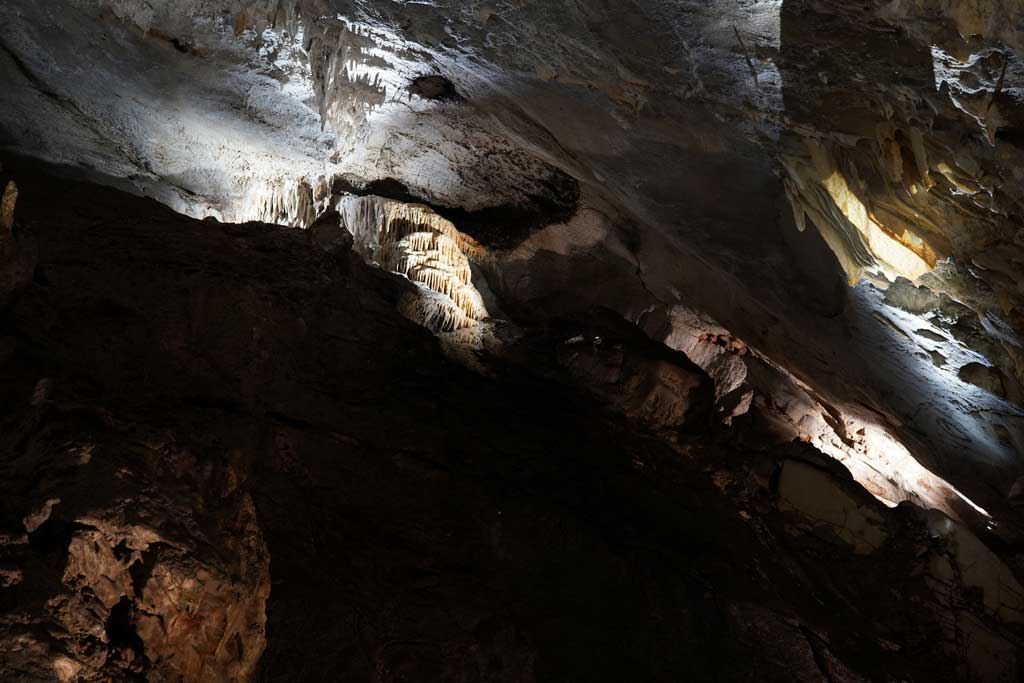
The first part of the gallery after the Grande Sala, together with Sala delle Spugne, received a scenographic lighting treatment.
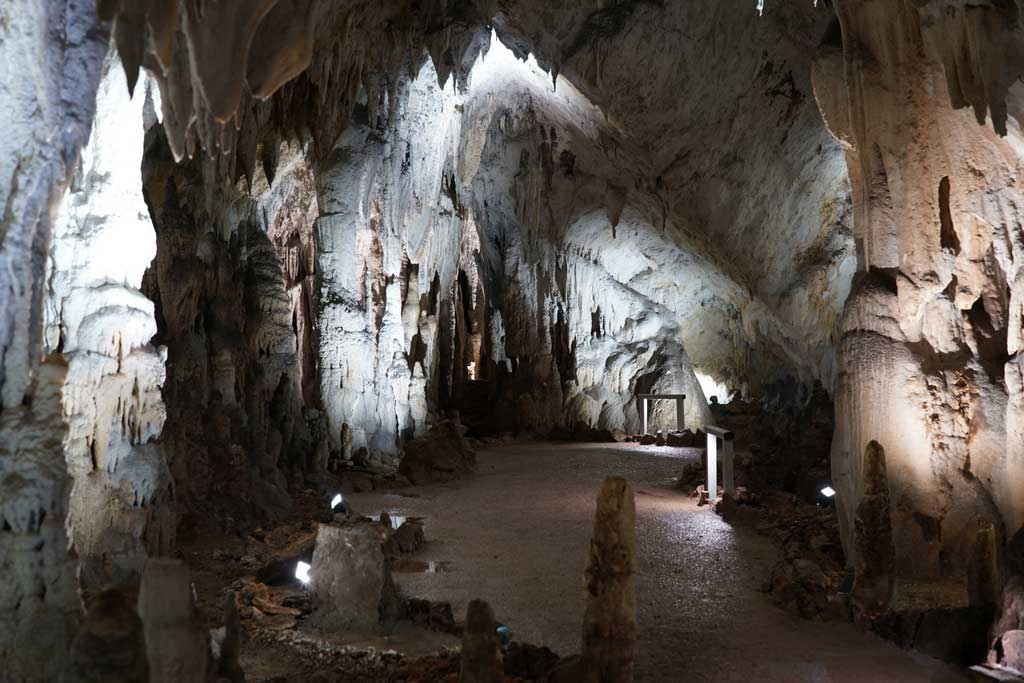
Light and shadow are used intentionally to reveal stalactites, stalagmites, concretion-covered walls, the profile and height of the gallery, and the overall volume of the hall. Even wall sections without strong calcite formations are now treated as part of the cave’s visual identity, with their textures, colours, and relief made more legible.
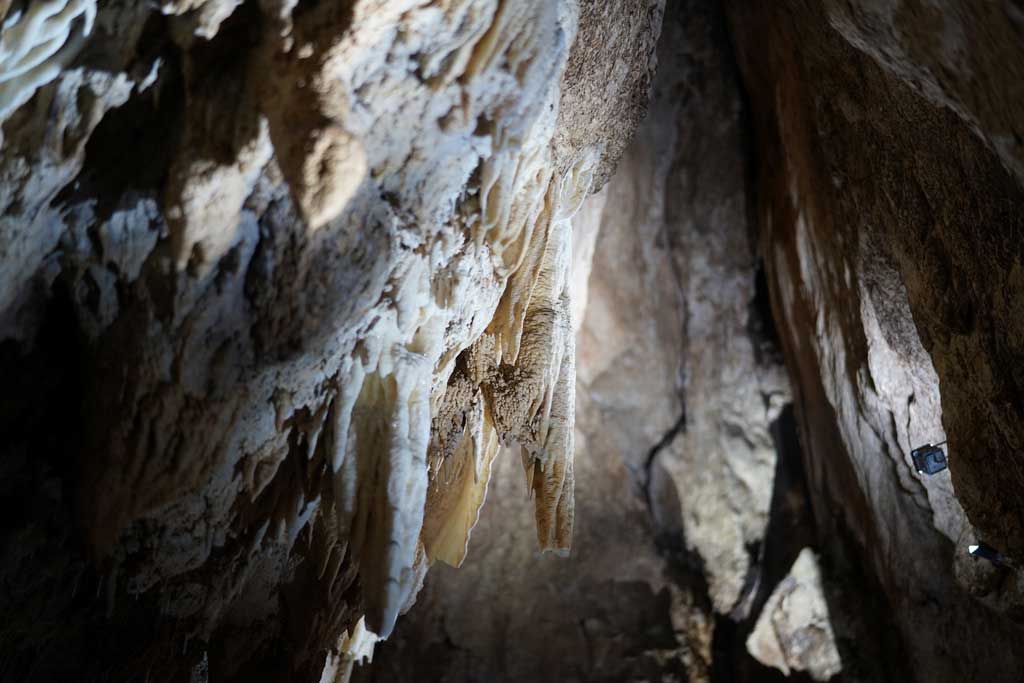
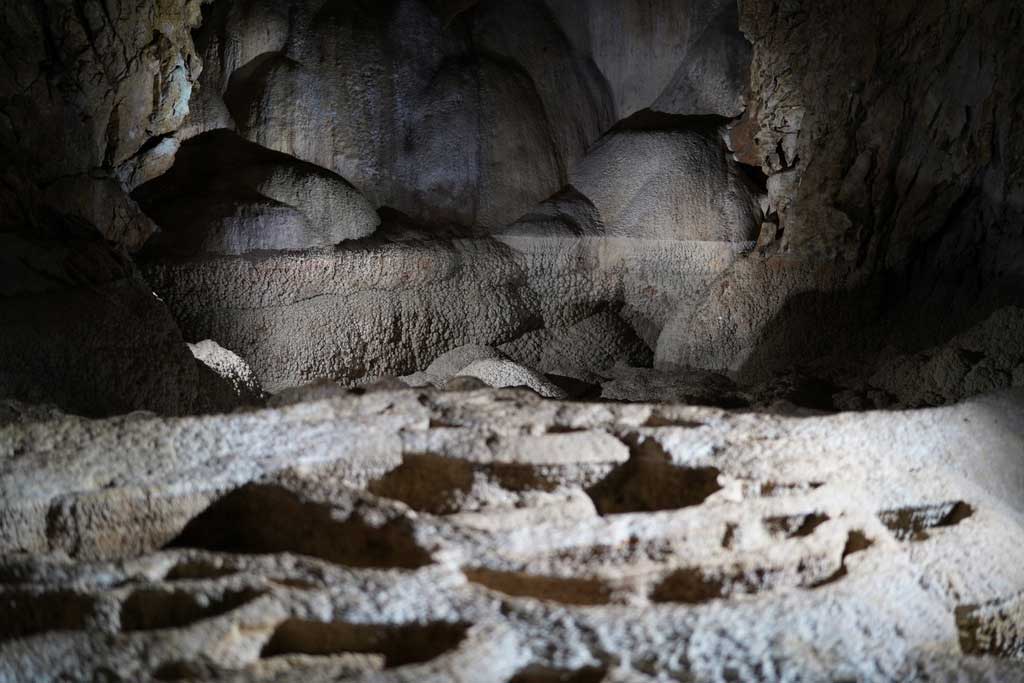
Safety Without Over-Illumination
The pathway lighting was designed to be clear and safe, but deliberately restrained. The aim was to provide sufficient visibility for visitors without flooding the cave with unnecessary light.
The lighting is operated by the guide through three control points and three radio-receiver units, allowing the visit to be managed in a structured and controlled way.
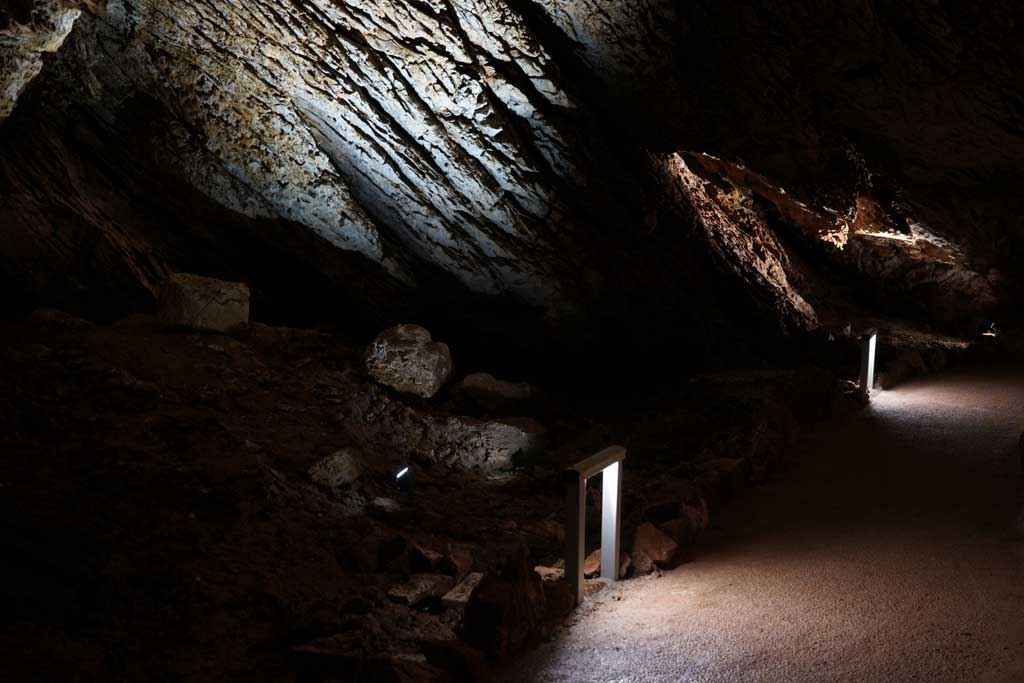
A Clearer, Deeper, More Immersive Visit
The result is a more comfortable and engaging visitor experience. The gallery and Sala delle Spugne are now easier to understand visually, with improved depth, clearer formations, and a more natural atmosphere.
At the same time, the installation is less intrusive, more efficient, and better adapted to future maintenance.
4. Phase Two: Enhancing Sala del Paradiso – February–March 2026
Extending the Lighting Strategy
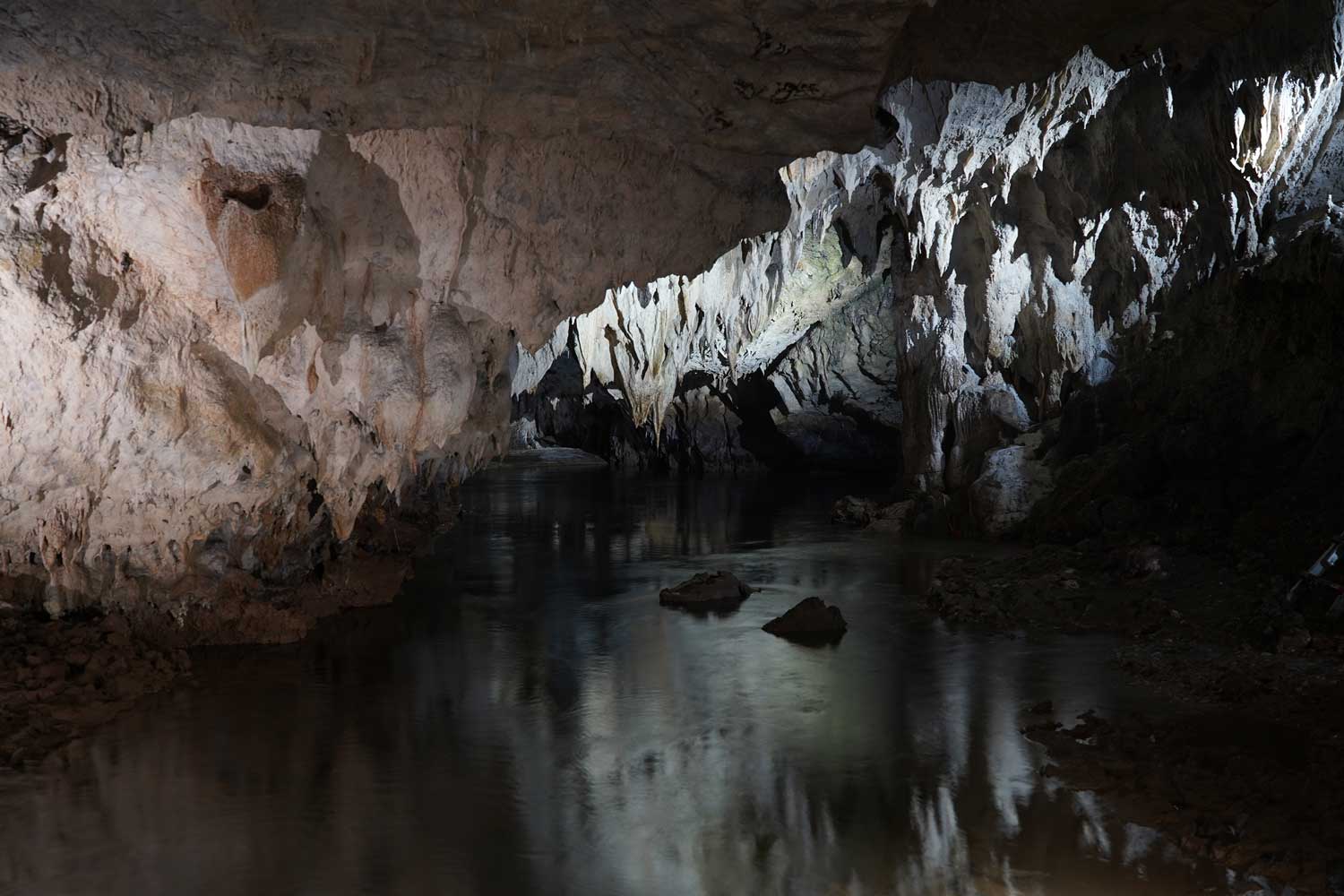
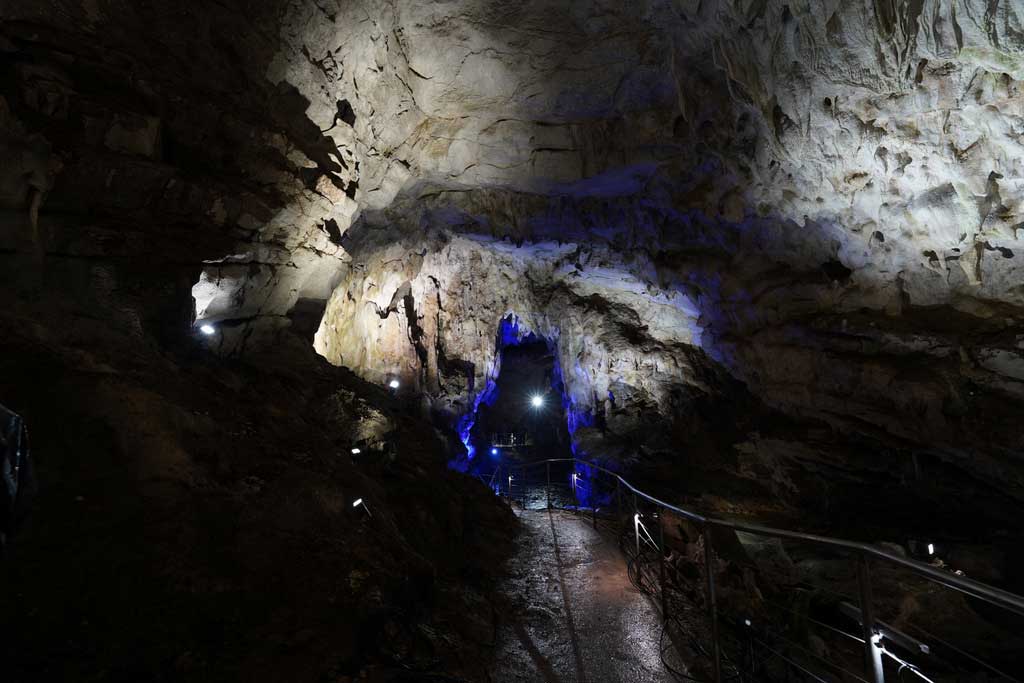
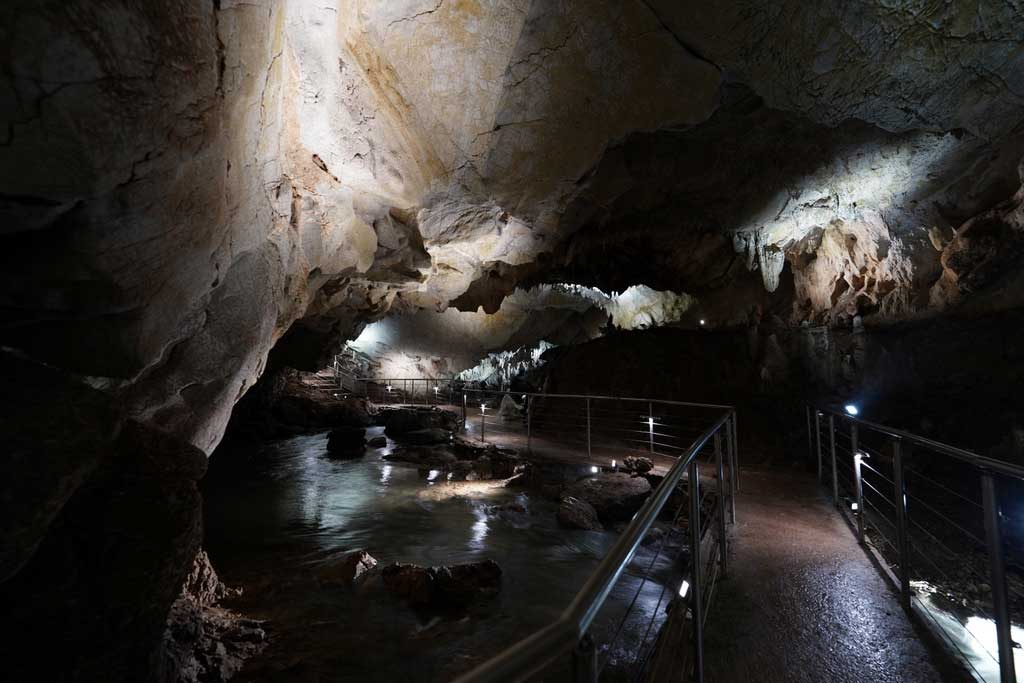
The second phase of the extended maintenance works was carried out between February and March 2026. It focused on Sala del Paradiso and on the access gallery leading from the waterfall area to the hall.
Although Sala del Paradiso itself is not one of the largest spaces in the cave, it contains a large number of concretions, and the access gallery is wide and high, making it an important visual sequence within the visitor route.
A Consistent Method Adapted to Each Space
The intervention followed the same general approach used in the first phase. Selected old fixtures were removed, new luminaires were installed, new cable routes were created, and the lighting equipment was repositioned according to the spatial character of the gallery and the hall.
The system was integrated into the control infrastructure, lighting scenes were created, and final tests and adjustments were carried out directly on site.
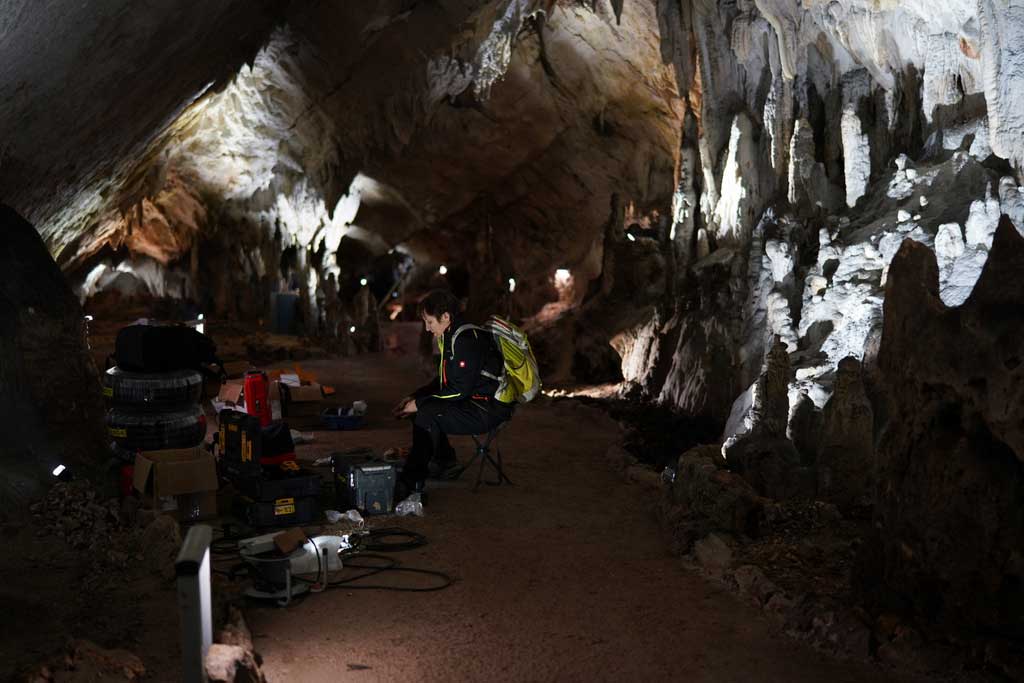
A Carefully Balanced Lighting Installation
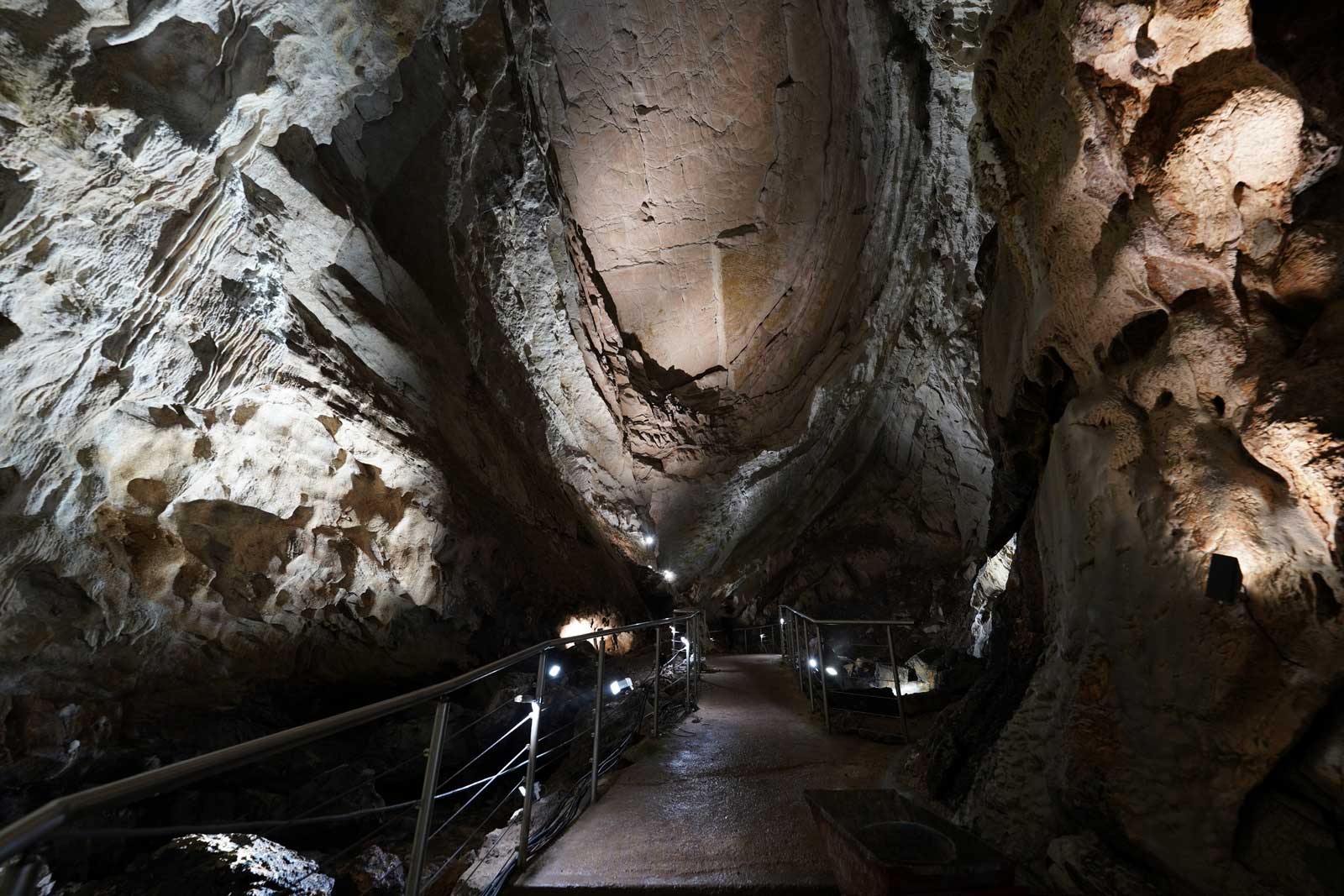
For this second phase, the new lighting solution included 65 cold white luminaires, 6 neutral white luminaires, 26 outdoor-rated luminaires, 39 outdoor-rated pathway luminaires, and 5 RGBW luminaires for selected scenic effects.
The use of more controlled beam angles allowed the lighting to be directed only where needed, supporting the visual quality of the visit.
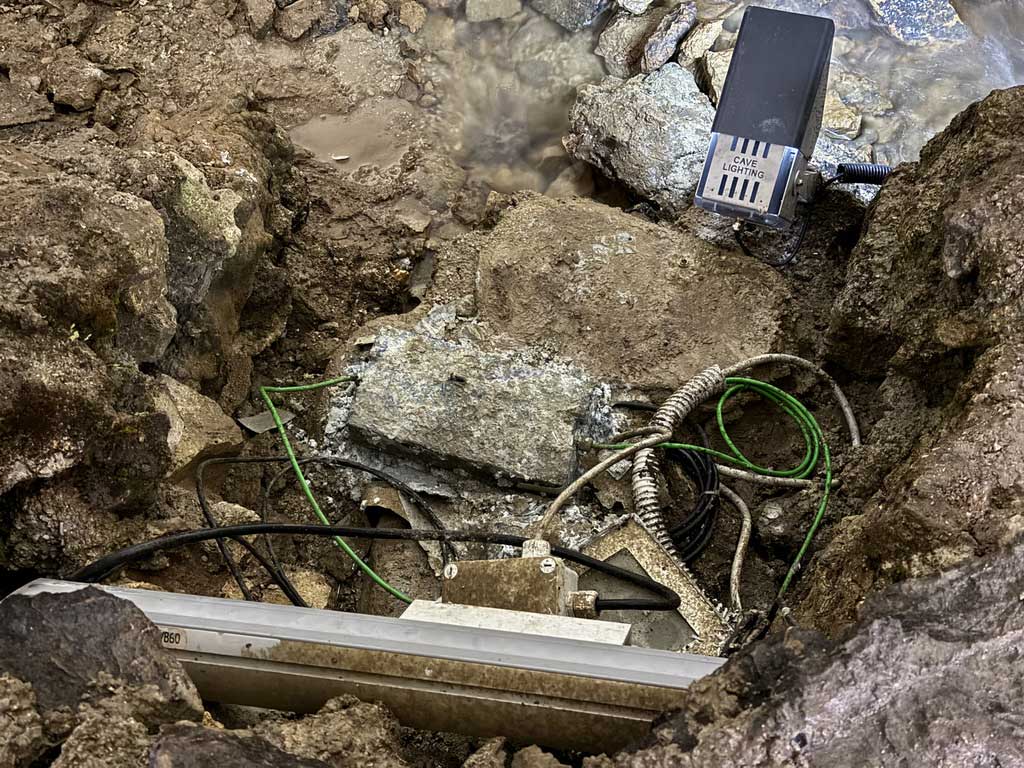
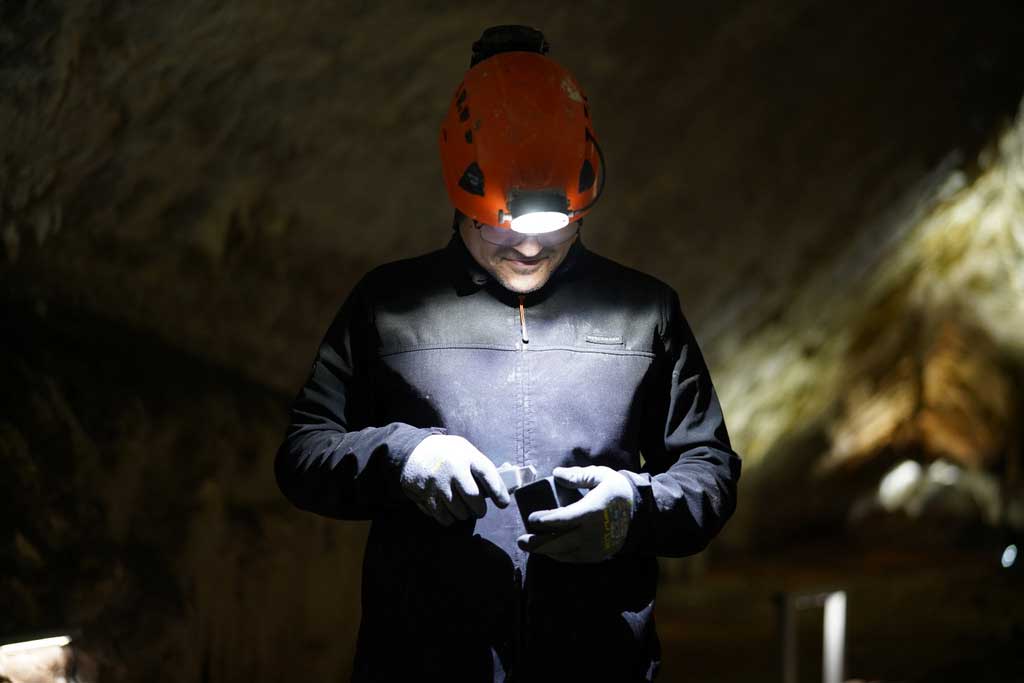
Giving Depth to the Gallery and Definition to the Hall
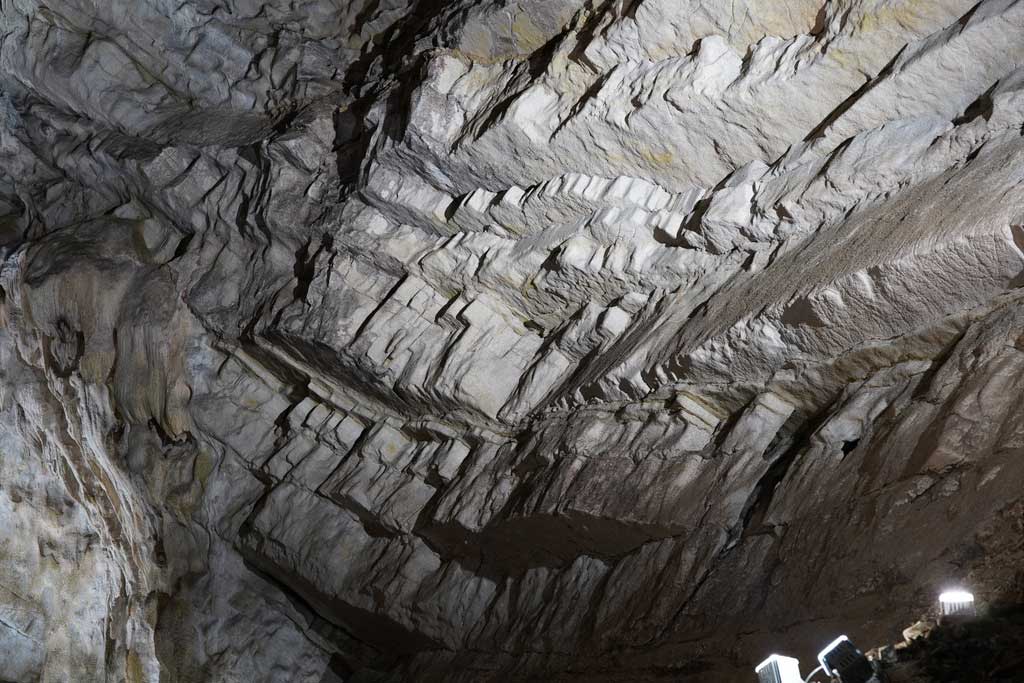
The new lighting enhances the height and profile of the access gallery, the textures of the rock walls, the visible relief of the cave surfaces, and the formations within Sala del Paradiso.
The pathway is clearly illuminated, but with restrained light levels, so that visitors can move safely while the surrounding cave remains shaped by directed light and shadow.
The result is a more expressive and balanced visitor experience. The transition from the waterfall area toward Sala del Paradiso is now clearer and more atmospheric, while the hall itself benefits from better visual definition.
Rock textures, natural colours, and spatial depth are easier to perceive, and the renewed installation remains more discreet, reliable, and easier to maintain.
5. Next Steps: Extending the Renovation Across the Cave
A Gradual Extension of the Lighting Strategy
Following the interventions in Sala delle Spugne, the access gallery from the Grande Sala, Sala del Paradiso, and the gallery leading from the waterfall, the next step is the gradual continuation of the extended maintenance works in the remaining sections of the Pertosa-Auletta Caves.
The work already completed provides a practical reference for the future development of the visitor route.
Renewal, Repositioning, and Technical Improvement
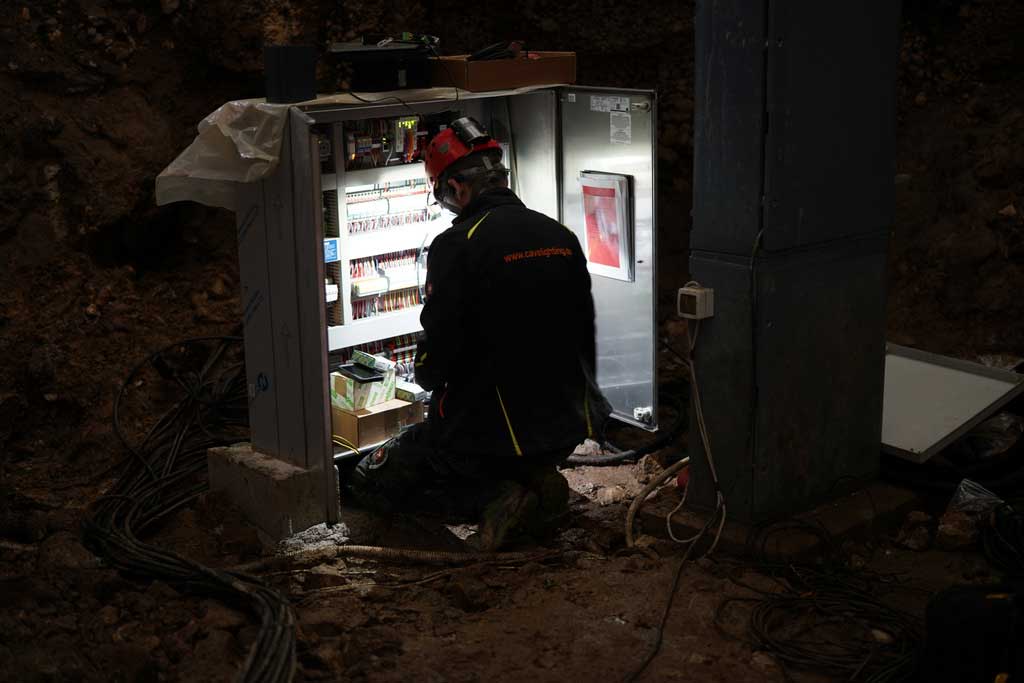
The planned continuation will follow the same principles applied in the first two phases. Unsuitable and obsolete luminaires will be removed, cable routes will be renewed or improved, and lighting fixtures will be repositioned according to the specific character of each chamber, gallery, and passage.
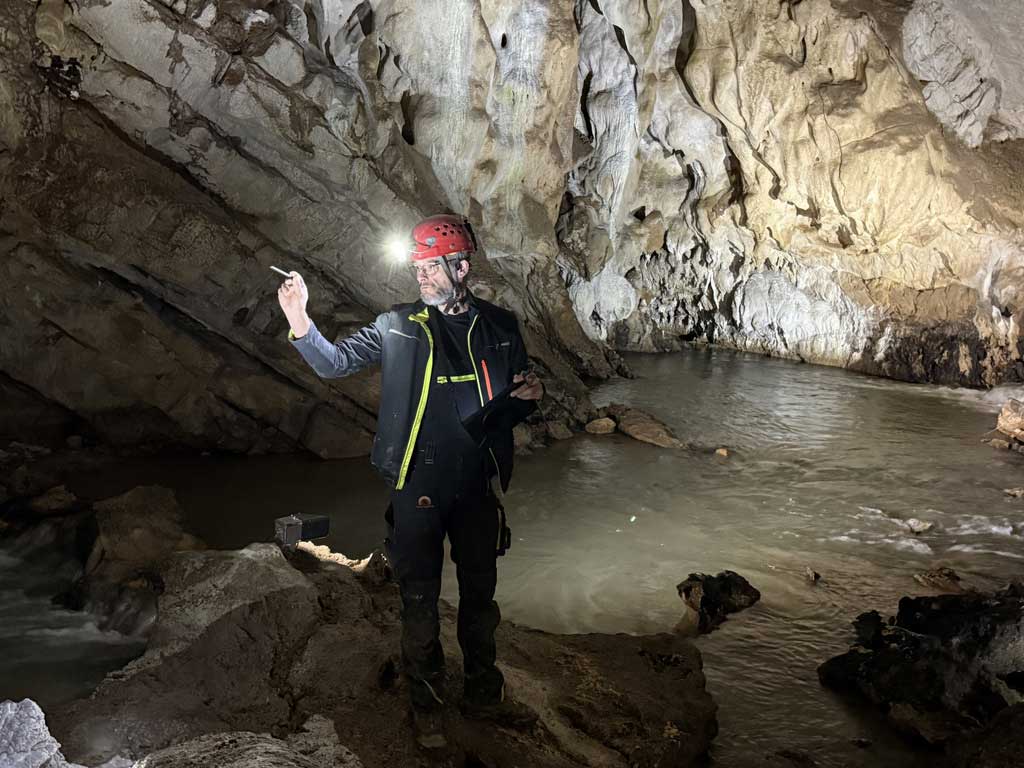
Particular attention will continue to be given to reliability, waterproofing, and the reduction of maintenance requirements in the humid cave environment.
Lighting That Follows the Visitor Route
A central objective will be to improve control over the lighting during guided tours. Instead of keeping large areas illuminated continuously, the future system should allow the lighting to support the actual movement of visitors through the cave.
This will help reduce unnecessary lighting time, limit conditions that encourage lampenflora growth, and improve the overall efficiency of the installation.
Revealing More by Lighting Less
The future lighting approach will not aim to illuminate the cave uniformly. Instead, it will use carefully directed light to reveal selected natural features while preserving areas of shadow.
Larger chambers may require lighting that enhances volume and depth, while narrower passages can benefit from more controlled and subtle illumination. Formations, rock profiles, wall textures, water-related elements, and natural colour variations will be highlighted selectively.
A Safer, More Efficient and More Respectful Cave Experience
The continuation of the extended maintenance program will therefore complete the transition toward a more reliable, efficient, and sensitive visitor-route lighting system.
The final goal is to improve safety, reduce maintenance issues, limit unnecessary environmental impact, and strengthen the scenic quality of the visit throughout the Pertosa-Auletta Caves.